

 Futurismo Biologists Team
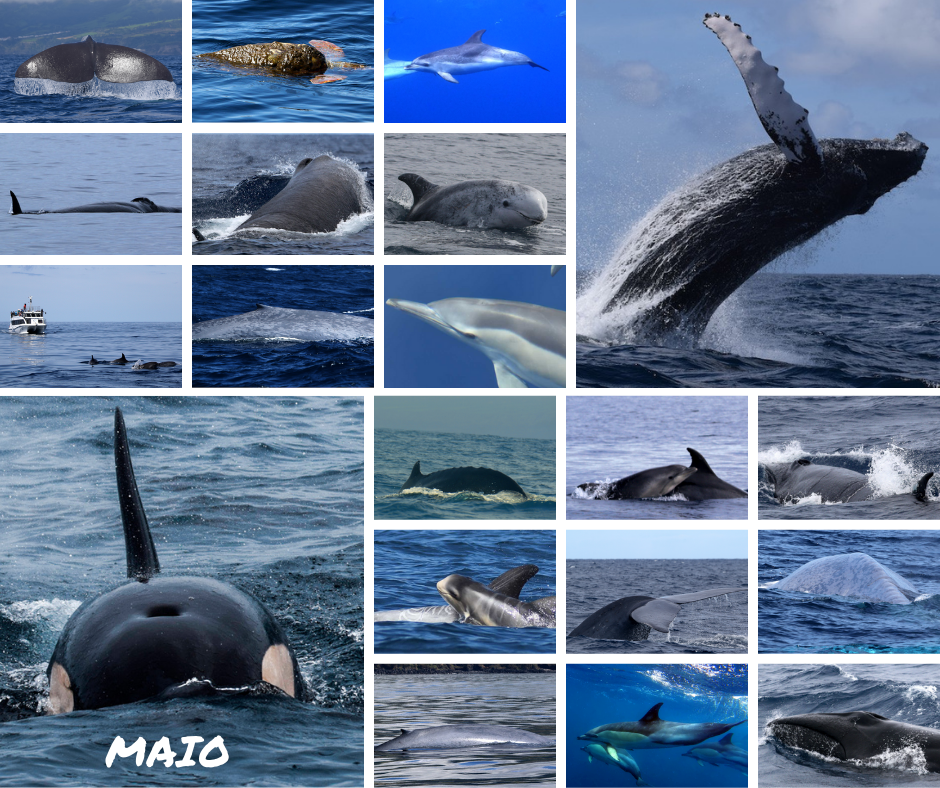
This month of May did perfectly represent the transition of the whale watching season, gradually saying goodbye to the typical spring species and welcoming our summer visitors. As if the animals had a calendar on their refrigerator, the orcas have been the first passing by this month, followed by different species of baleen whales such as the blue whale, fin whale, humpback whale or the straggling sei whales.
In May the phytoplankton bloom and the resulting abundance in food persists, although as the days go by and the weather improves the waters begin to get more transparent. The ocean around us has become warmer and bluer, but at the same time poorer in nutrients and suspended particles in the top layers.
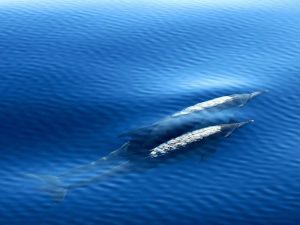
However, this is not a disadvantage for other species that seek other types of food and that have already started to arrive on our coasts, as it is the case of the friendly spotted dolphins.
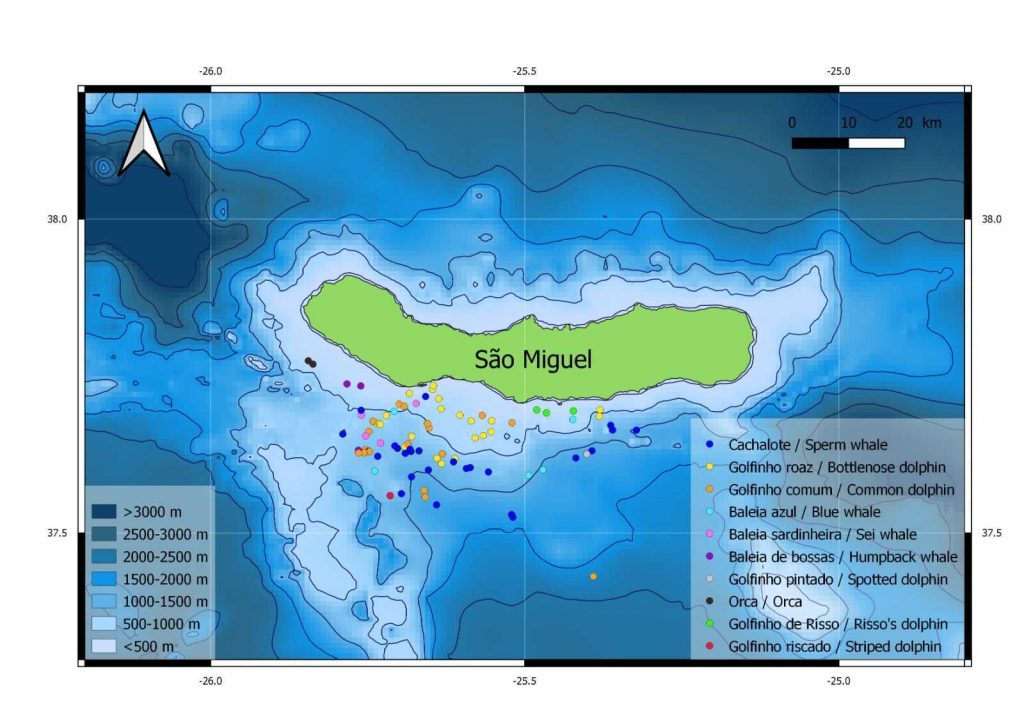
Top of our ranking of the month, guess who, yes it is the icon of the Azores with none-the-less than 18 days of sperm whales sightings out of a total of 22 days at sea. We have been able to recognize several individuals, apart from our most sighted male “Mister Liable”, females like “Whitehead”, “Penakabe”, “Coconut”, “Diamond”, “Orca”, “Bear Paw” and “Left Tip” all well-known members of the white and the red unit.
We have even baptized a sperm whale! “Milka” was suggested and voted for our Photo-ID catalog number 470!
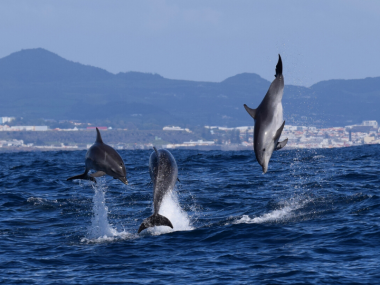
Following closely behind, common dolphins and bottlenose dolphins (both resident species together with the sperm whale) were sighted a total of 17 days each, tying for second place.
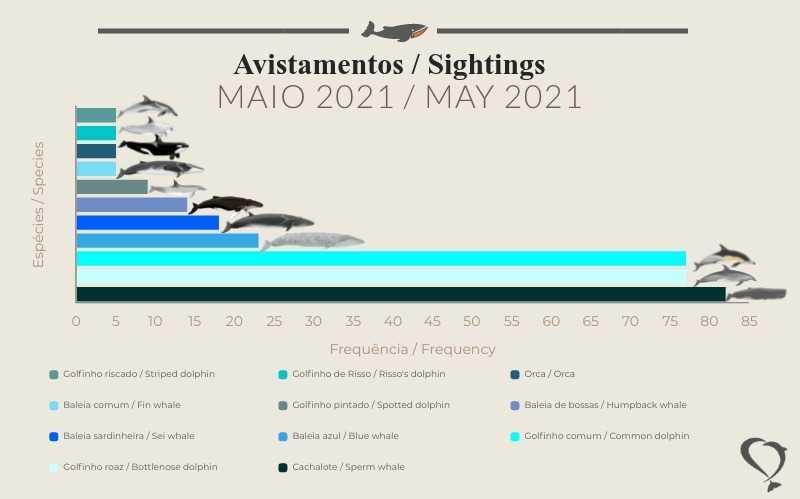
The next on the list is already a migratory species, the blue whale, which made its appearances mainly during the first fortnight of the month, although we do not give up hope of still finding some individuals that have left the breeding grounds late for their annual travel northbound.
We also got visits from the humpback whales, which came up from Cape Verde to our coasts this month, and were seen on three different days.
Slightly later than their cousins, the sei whales could be seen during the second half of the month on up to 4 different days. They usually arrive later than other baleen whales, so we will probably still have the opportunity to see more of them this month.
The Orcas showed up the last time in São Miguel on the first day of the month making it the third time this spring. Other species such as fin whales, Risso’s dolphins and striped dolphins gave us a unique but unforgettable opportunity to encounter them this May.
To top off this varied month the first spotted dolphins announced the summer season, arriving on the last week, to stay for the next few months in the warm summer waters.
Apart from cetaceans, other common species of birds accompanied our tours, such as Cory’s shearwaters, yellow-legged gulls and common terns. The sighting of Bulwer’s petrels, which are sometimes found in waters further away from the coast, stood out and even more a great skua, which at this period is considered a rarity. When visiting the islets rock pigeons could be observed and kittiwakes also joined the list.
Portuguese man o’ wars dominated at the beginning of the month, but were gradually disappearing out of sight, probably due to the change of the predominant winds, which are increasingly from the north, pushing them further away from the south coast.
Loggerhead turtles, salps, flying fish and even hammerhead sharks were spotted from our boats, brightening up the traveling to and back from the cetaceans.
We were able to observe triggerfish, black seabreams, crabs and other crustaceans like goose neck barnacles, some of them due to their regular association with marine litter that we collect from the sea on our trips.

 Futurismo Biologists Team

 Futurismo Biologists Team

 Sandrina Rodrigues
