

 azwhales
Today we saw Risso’s, common and bottlenose dolphins. We are always happy to find all kind of species but seeing Rissos is always cause of joy as we don’t see them that often, even thought it is considered as a resident specie of the Açores.
Here some detailed information about our beautiful Risso’s:
The Risso’s dolphins (in Portuguese known as Grampo) is the fifth largest of the delphinids and
one of the 3 resident species in Azores.
Its anterior body is extremely robust, tapering to a relatively narrow tail
stock and its dorsal fin is one of the tallest in proportion to body length of
any cetacean, exceeded only by that of the adult male killer whale (Orcinus
orca). A cetacean that can reach 4 meters long and weight as
much as 500kg. They have a morphological characteristic
that results in an adaptation to the feed, which consists in a square design of
the head that facilitates the catching of squids. They can be found in a wide range of colors, because they are
born with a dark color and as they grow older, they gain a whiter color and the
body full of scars (Colour patterns change dramatically
with age). Older
animals can appear completely white on the dorsal surface. This is a widely
distributed species, inhabiting deep oceanic and continental slope waters 400-
1,000 m deep from the tropics through the temperate regions in both
hemispheres. Sighting records indicate this species occurs roughly between 60°N
and 60°S latitudes, where surface water temperature are above 10 °C. Risso’s
dolphins are pelagic, mostly occurring seaward of the continental slope. They
frequent subsurface sea-mounts and escarpments where they are thought to feed
on vertically migrant and mesopelagic cephalopods. In the North Atlantic and
western Pacific, there appears to be a summer calving peak and a winter calving
peak in the eastern Pacific. They are are often seen surfacing slowly, although
they can be energetic, sometimes breaching or porpoising, and occasionally
bowriding. Normally Risso’s associate in groups tend to be small to moderate in
size, from 2-100 individuals, averaging 30 animals, but groups of up to 4,000
have been reported, presumably in response to abundant food resources. Risso’s
dolphins prey on a mix of neritic, oceanic, and occasionally bottom dwelling
cephalopods and they normally feed at day. Risso’s are often seen surfacing
slowly, although they can be energetic, sometimes breaching or porpoising, and
occasionally bowriding
one of the 3 resident species in Azores.
Its anterior body is extremely robust, tapering to a relatively narrow tail
stock and its dorsal fin is one of the tallest in proportion to body length of
any cetacean, exceeded only by that of the adult male killer whale (Orcinus
orca). A cetacean that can reach 4 meters long and weight as
much as 500kg. They have a morphological characteristic
that results in an adaptation to the feed, which consists in a square design of
the head that facilitates the catching of squids. They can be found in a wide range of colors, because they are
born with a dark color and as they grow older, they gain a whiter color and the
body full of scars (Colour patterns change dramatically
with age). Older
animals can appear completely white on the dorsal surface. This is a widely
distributed species, inhabiting deep oceanic and continental slope waters 400-
1,000 m deep from the tropics through the temperate regions in both
hemispheres. Sighting records indicate this species occurs roughly between 60°N
and 60°S latitudes, where surface water temperature are above 10 °C. Risso’s
dolphins are pelagic, mostly occurring seaward of the continental slope. They
frequent subsurface sea-mounts and escarpments where they are thought to feed
on vertically migrant and mesopelagic cephalopods. In the North Atlantic and
western Pacific, there appears to be a summer calving peak and a winter calving
peak in the eastern Pacific. They are are often seen surfacing slowly, although
they can be energetic, sometimes breaching or porpoising, and occasionally
bowriding. Normally Risso’s associate in groups tend to be small to moderate in
size, from 2-100 individuals, averaging 30 animals, but groups of up to 4,000
have been reported, presumably in response to abundant food resources. Risso’s
dolphins prey on a mix of neritic, oceanic, and occasionally bottom dwelling
cephalopods and they normally feed at day. Risso’s are often seen surfacing
slowly, although they can be energetic, sometimes breaching or porpoising, and
occasionally bowriding
The most threats of Risso’s are:
·
Direct
catch (in Sry Lanka); Incidental catch (southern Caribbean, the Azores, Peru);
Direct
catch (in Sry Lanka); Incidental catch (southern Caribbean, the Azores, Peru);
·
Culling
(Off Japan, Risso’s
dolphins were killed in the drive fishery (oikomi) in response to
competition with commercial fisheries);
Culling
(Off Japan, Risso’s
dolphins were killed in the drive fishery (oikomi) in response to
competition with commercial fisheries);
·
Pollution
(Increasing levels of
plastics and other refuse at sea may pose a threat to wild populations:
Necropsies of specimens from Japan revealed that they had eaten foreign
materials such as plastic bags, soda cans, and pieces of rope, which may have
been fatal);
Pollution
(Increasing levels of
plastics and other refuse at sea may pose a threat to wild populations:
Necropsies of specimens from Japan revealed that they had eaten foreign
materials such as plastic bags, soda cans, and pieces of rope, which may have
been fatal);
· Noise pollution (In early 2004 and in 2005, several unusual stranding
events including Risso’s dolphins occurred in Taiwan during a period when
large-scale naval exercises were conducted in and on nearby waters)
events including Risso’s dolphins occurred in Taiwan during a period when
large-scale naval exercises were conducted in and on nearby waters)
The IUCN lists G. griseus as “Least
Concern”
Concern”
(Text by Rafael Martins)
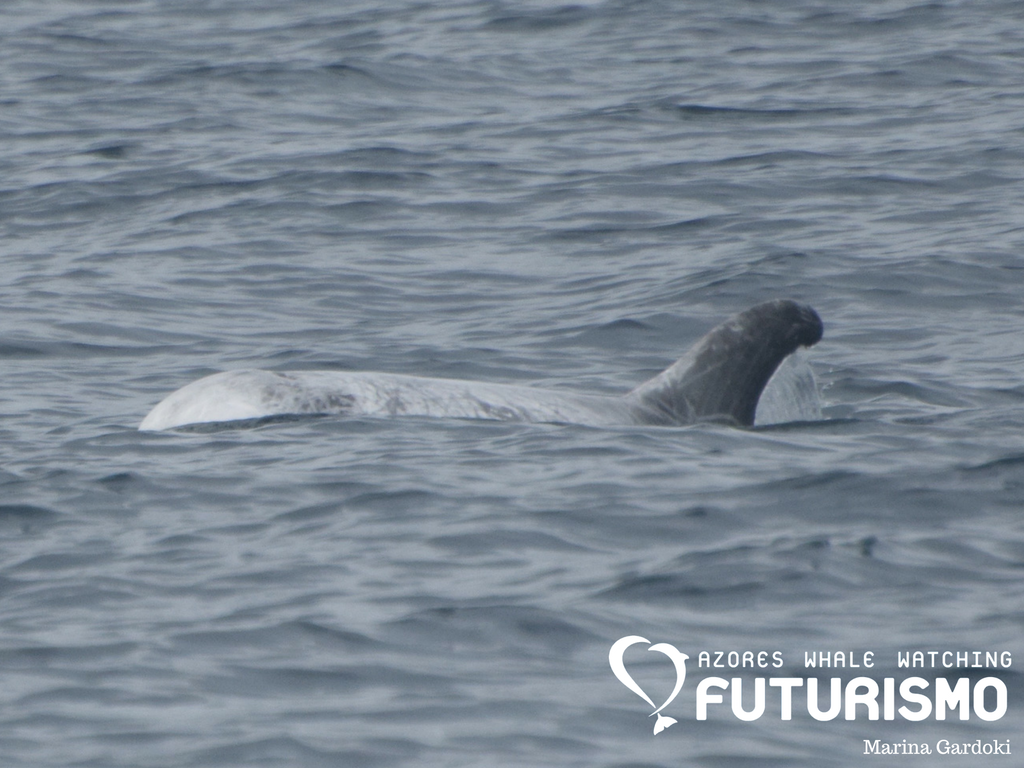
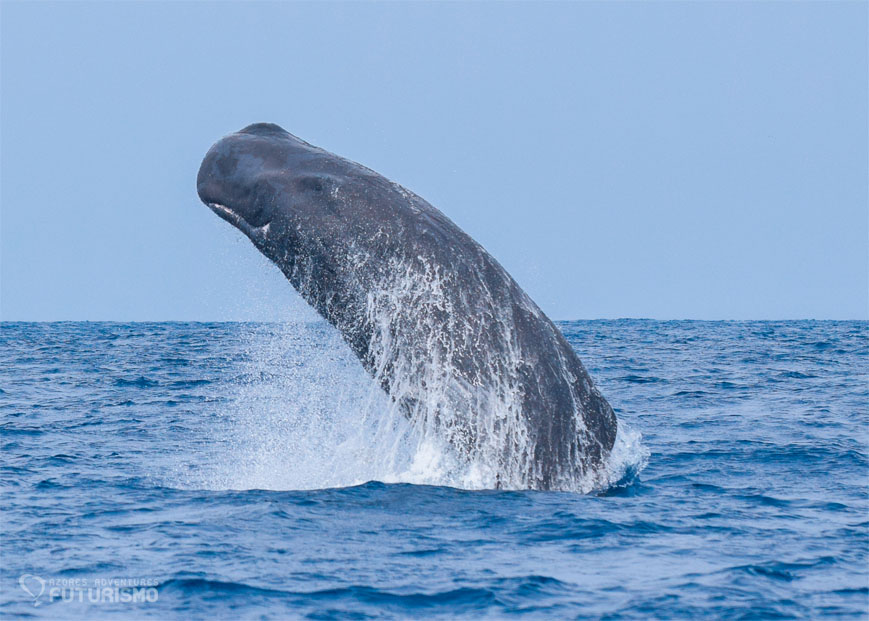
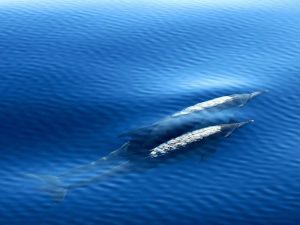
Some photos of today’s encounter with the Risso’s dolphins
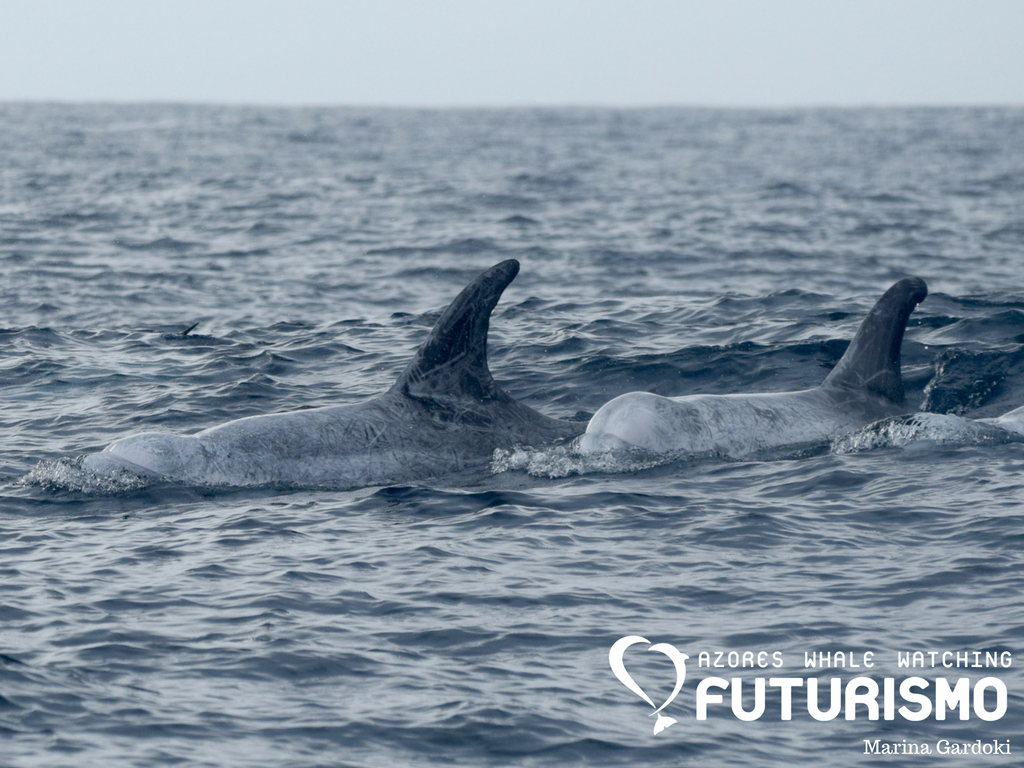
Here we can appretiate the round head they have
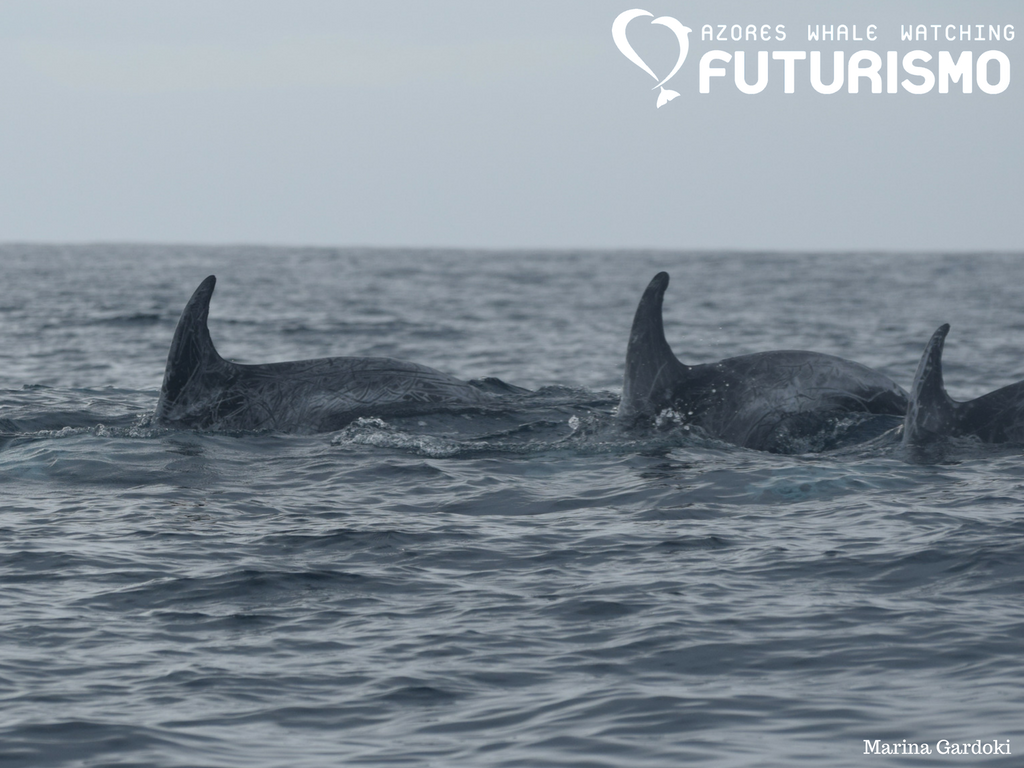
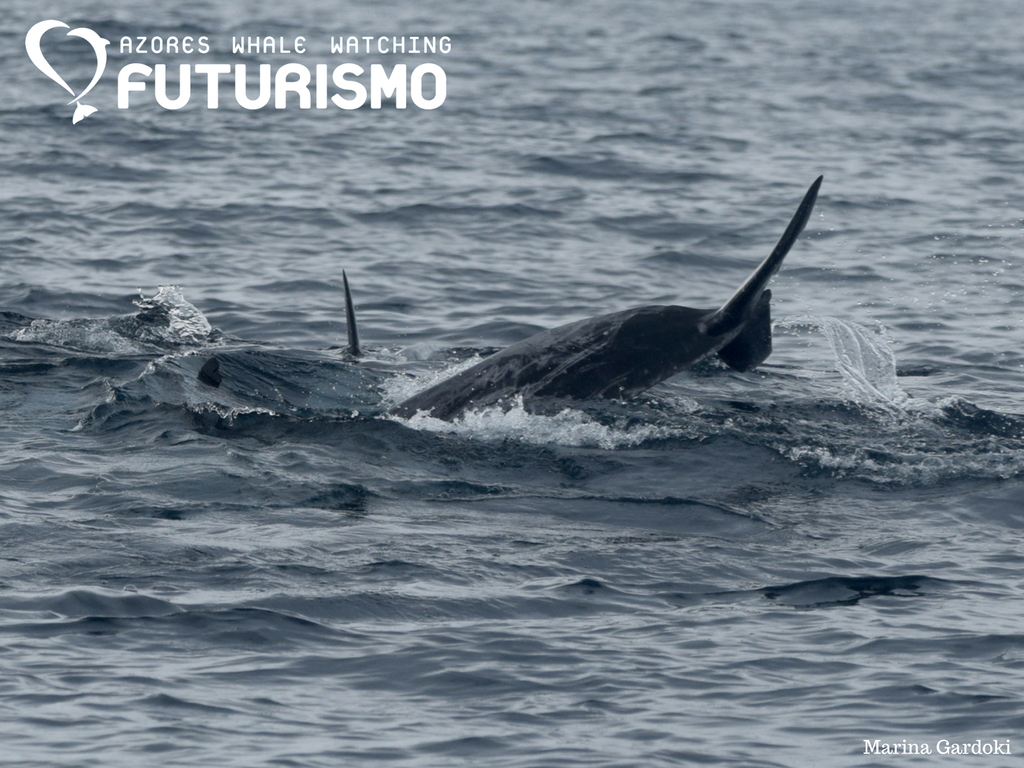
Socializing


 azwhales

 Futurismo Biologists Team
 Sandrina Rodrigues

1 comment
Nice post thank you!