

 Futurismo Biologists Team
Velella velella | Velella
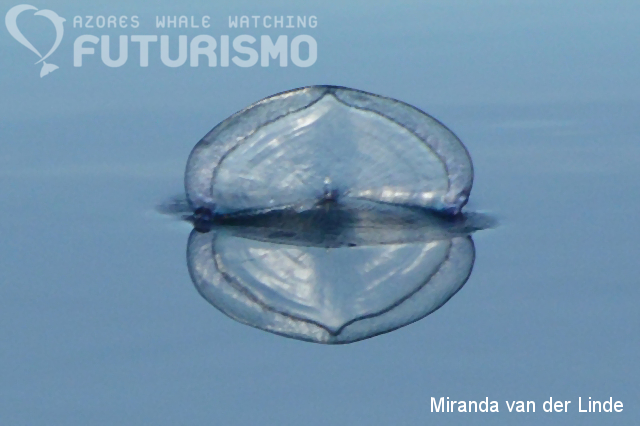
Velella is also know as the “by the wind sailor” or “Jack sail by the wind”. A single velella is actually a hydroid colony of numerous all-female polyps, each with one of three different specialised functions:
1) Feeding – a large tubular individual with a mouth in the centre of colony (Gastrozoid)
2) Defense – several smaller individuals surrounding the feeding individual ( Dactylozooid)
3) Reproduction and Defense – the remaining individuals of the colony (Gonozooid)
The blue colour comes from a pigment, astaxantine, which protects the colony from sunlight. During the spring and autumn it is common to see large chains or aggregations of velellas known as blooms. Wind and currents can push these blooms so that mass strandings can occur on beaches. Although they use toxins to catch their prey, velellas are essentially harmless to humans.
Length:
Colony: 6 – 7 cm
Medusa: 1 mm
Diet: Crustaceans and fish larvae and eggs.
Reproduction: Bipartite life cycle with alternate asexual and sexually reproducing generations in the form of polyps and medusas respectively.
Population: Unknown
Conservation Status: Unknown
In other languages
Portuguese: Velela
Spanish: Velella
French: Vélelle
Italian: Barchetta di San Pietro
German: Segelqualle
Dutch: Bezaantje
Swedish: Bidevindseglare
Norwegian: Bidevindseiler
Danish: Bidevindssejler
Finnish: Purjehtijamaneetti
Polish: –
Russian: Парусница


 Futurismo Biologists Team

 Sandrina Rodrigues
