


 Equipa de Biólogos da Futurismo
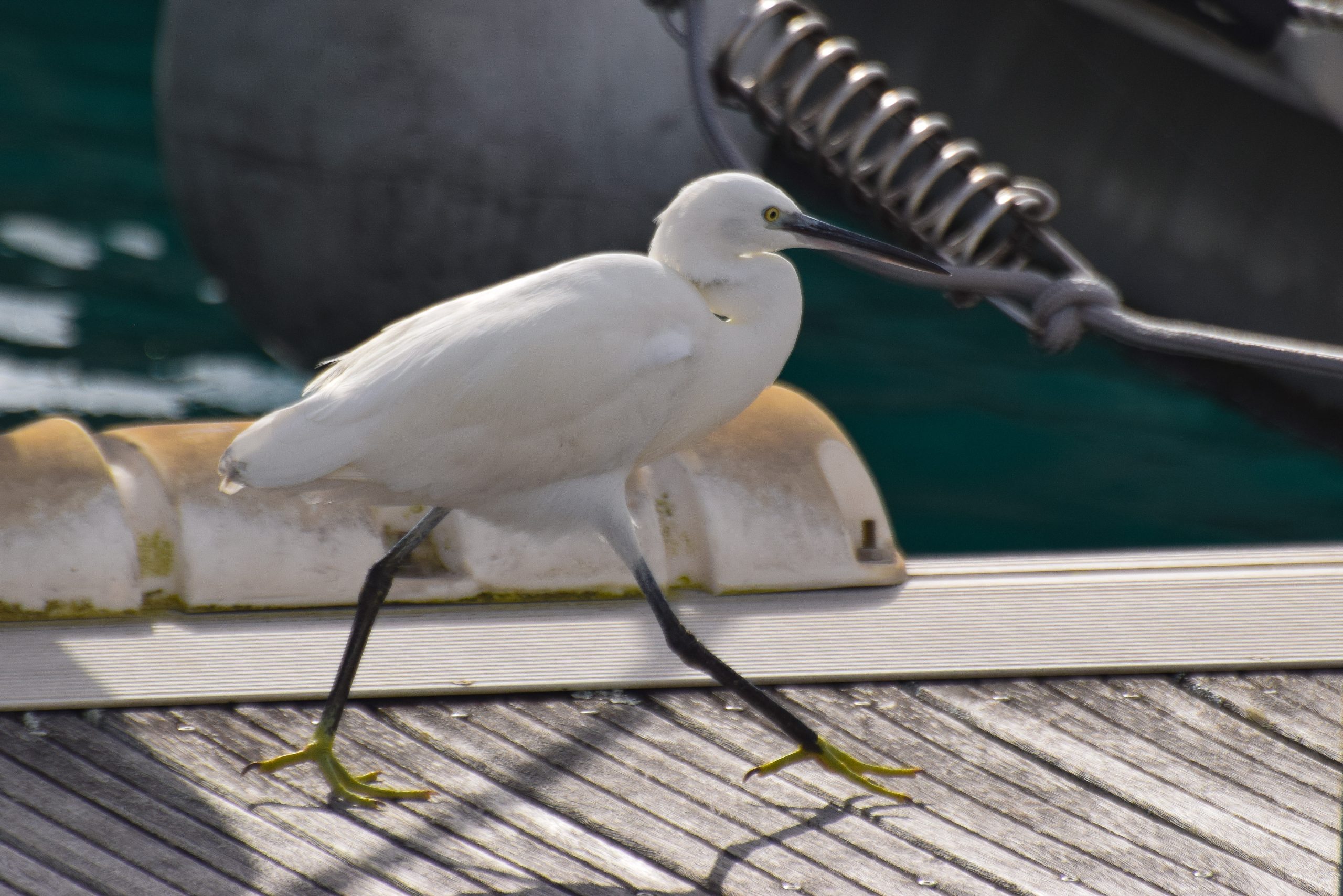
Egretta garzetta Little egret
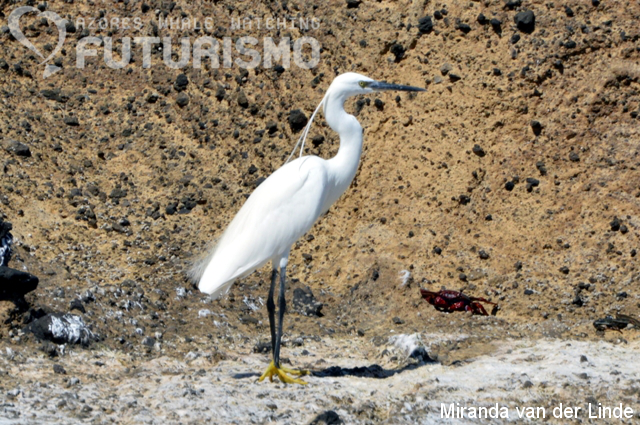
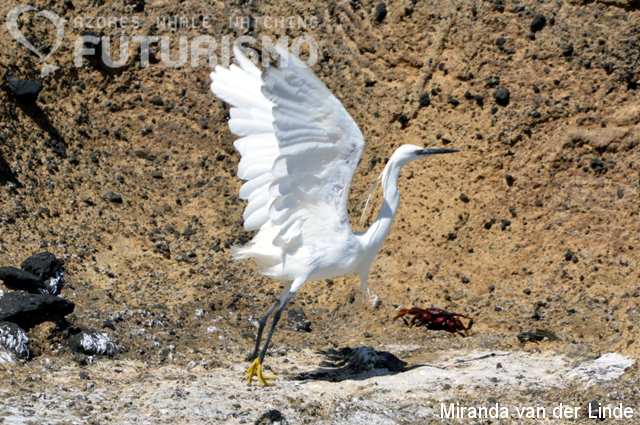
The Little Egret is a small white heron that is found in aquatic habitats such as estuaries, lagoons and shoreline ponds, dams, bogs, pits, water courses and paddies. It is completely white with yellow feet and an “S” shaped neck that folds back when the bird is in flight. In warmer locations most birds are permanent residents, whereas those from northern populations migrate to to Africa, the Middle East and sometimes to the south of Spain and Europe’s northwest in the winter. During the breeding season the adults have two long plumes in the nape, which is more evident in the males. At this time the bare skin between the bill and eyes becomes red or blue. Little egrets are usually solitary, but they sleep and nest in colonies.
During breeding they are monogamous and each couple will produce 3 to 5 eggs that are blueish-green in colour. They build nests with small sticks in the shape of a platform. In the Azoreans little egrets are sighted on all the islands but not regularly. This species is classified as an “uncommon vagrant” in the Azores. This species is classified as an “uncommon vagrant” in the Azores.
Length: 55 – 65 cm
Weight: 350 – 550 g
Wingspan: 88 – 106 cm
Population: c.640,000 – 3,100,000
Longevity:
• Average: 5 years
• Maximum: 9.5 years
Diet: Fishes, amphibians (adults and larvae), crustaceans, aquatic and terrestrial insects, earthworms, snails and even small mammals and reptiles
Breeding age: 2 years
Eggs: 3 – 5 (pale blueish green colour)
Incubation: 26 – 27 days
Nesting sites: Tree branches and rocks
In other languages
Portuguese: Garça branca pequena
Spanish: Garceta común
French: Aigrette garzette
Italian: Garzetta
German: Seidenreiher
Dutch: Kleine zilverreiger
Swedish: Silkeshäger
Norwegian: Silkehegre
Danish: Silkehejre
Finnish: Sikkihaikara


Another egret species – Cattle egret (Bubulcus ibis) (a rare vagrant in the Azores)




 Equipa de Biólogos da Futurismo



 Sandrina Rodrigues
