

 azwhales
We are leaving the spring time behind and entering the true Azorean summer time. Now we are having mostly summer time sightings, although during July there were still a few late migrating sei whales and fin whales passing São Miguel. The most encountered whale during July was the sperm whale, with encounters during 68% of the days we went out to sea. The majority of the Atlantic spotted dolphins are still to arrive, but its great to finally be seeing them here now, later than in past years. The most encountered dolphin species were the common dolphin (100% sightings rate) followed by the bottlenose dolphin (97% sightings rate). This month we also had some surprise rare encounters with orcas (killer whales) one day, false killer whales another day and several species of beaked whales throughout the month. As usual, we also encountered loggerhead turtles manta rays and sharks, among other types of marine life that the Azores is well known for.
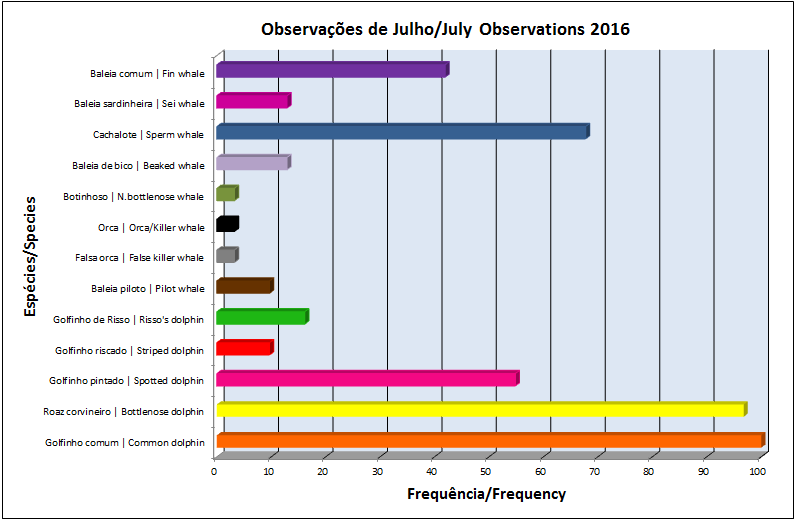
- Common dolphin (Delphinus delphis) – 100%
- Bottlenose dolphin (Tursiops truncatus) – 97%
- Atlantic spotted dolphin (Stenella frontalis) – 55%
- Striped dolphin (Stenella coeruleoalba) – 10%
- Risso’s dolphin (Grampus griseus) – 16%
- Pilot whale (Globicaphala spp.) – 10%
- False killer whale (Pseudorca crassidens) – 3%
- Orca/Killer whale (Orcinus orca) – 3%
- Northern bottlenose whale (Hyperoodon ampullatus) – 3%
- Beaked whale species (Mesoplodon spp.) – 13%
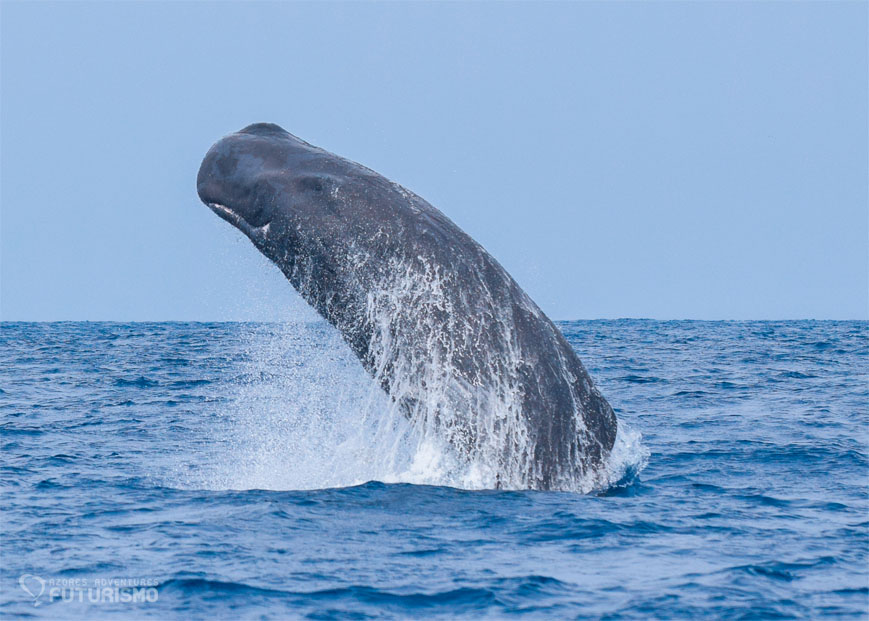
- Sperm whale (Physeter macrocephalus) – 68%
- Sei whale (Balaenoptera borealis) – 13%
- Fin whale (Balaenoptera physalus) – 42%


 azwhales


 Equipa de Biólogos da Futurismo
 Sandrina Rodrigues
