


 azwhales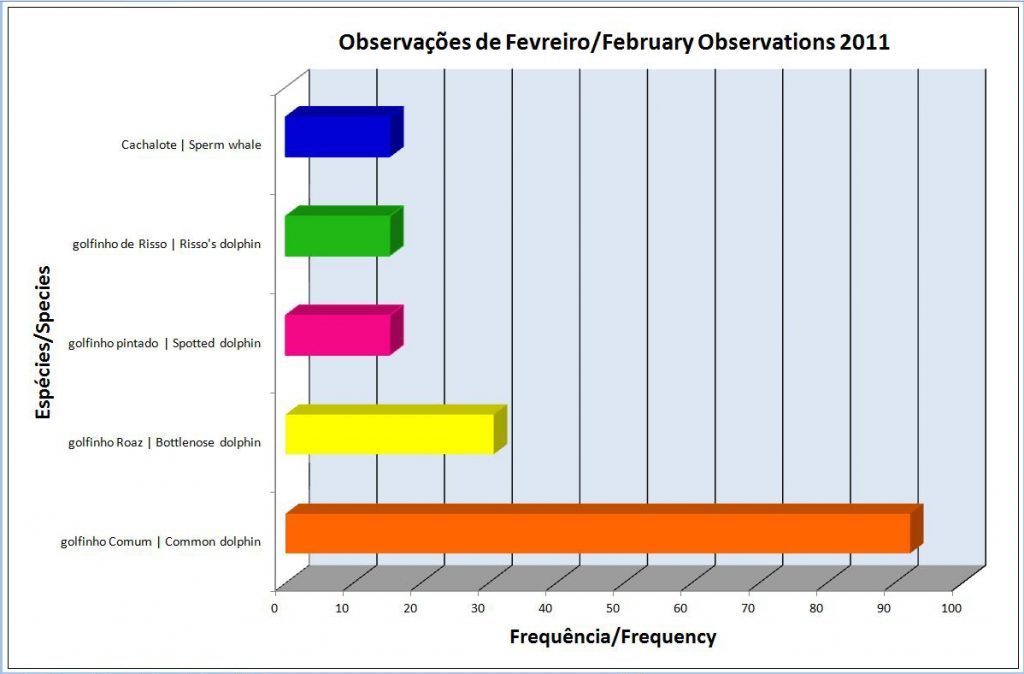
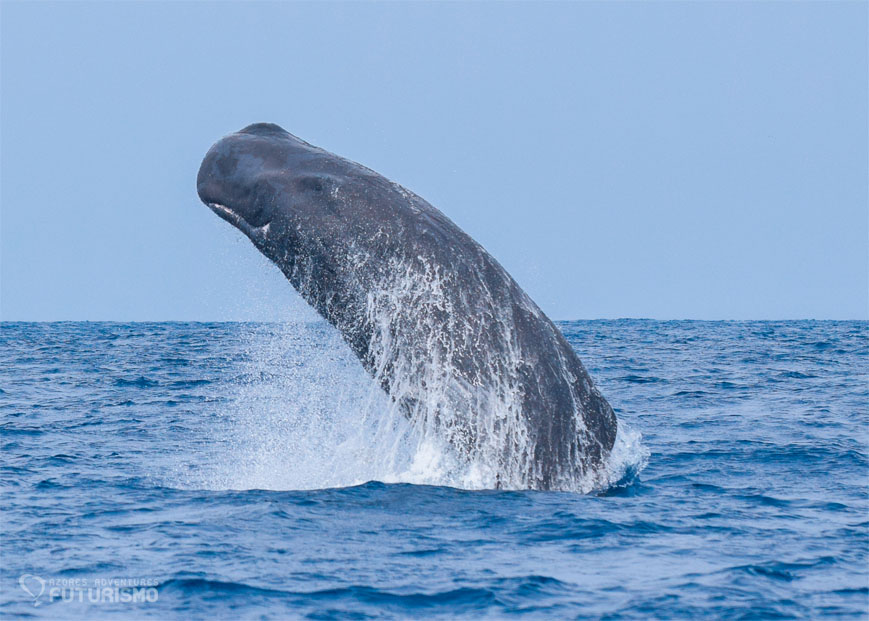
This past month we have sighted 5 cetacean species on our tours: sperm whales, Risso’s dolphins, Atlantic spotted dolphins, bottlenose dolphins and common dolphins. Not bad considering we only went out to see 13 days throuhgout the month. January and February are often our weakest months in terms of the number of tours we have and our sighting frequencies, but this year has actually been good compared to past years. This year the Atlantic spotted dolphins stayed here until early February instead of leaving earlier for the winter as they usually do. The other four species we sighted this February are all resident species here, so we can rely on them being in the Azores throughout the whole year. As we enter the spring we can expect some of our migratory or seasonal species to start arriving. During the months of March to June we often see the greatest diversity of species as this is the time that several types of baleen whales pass by on their migration and we also start to see some of our summer species. The Futurismo team is really looking forward to this time and we anticipate that any time soon the baleen whales (such as the blue whale, fin whale, sei whale and humpback whale) will start appearing.


 azwhales


 Equipa de Biólogos da Futurismo
 Sandrina Rodrigues
