


 Equipa de Biólogos da Futurismo
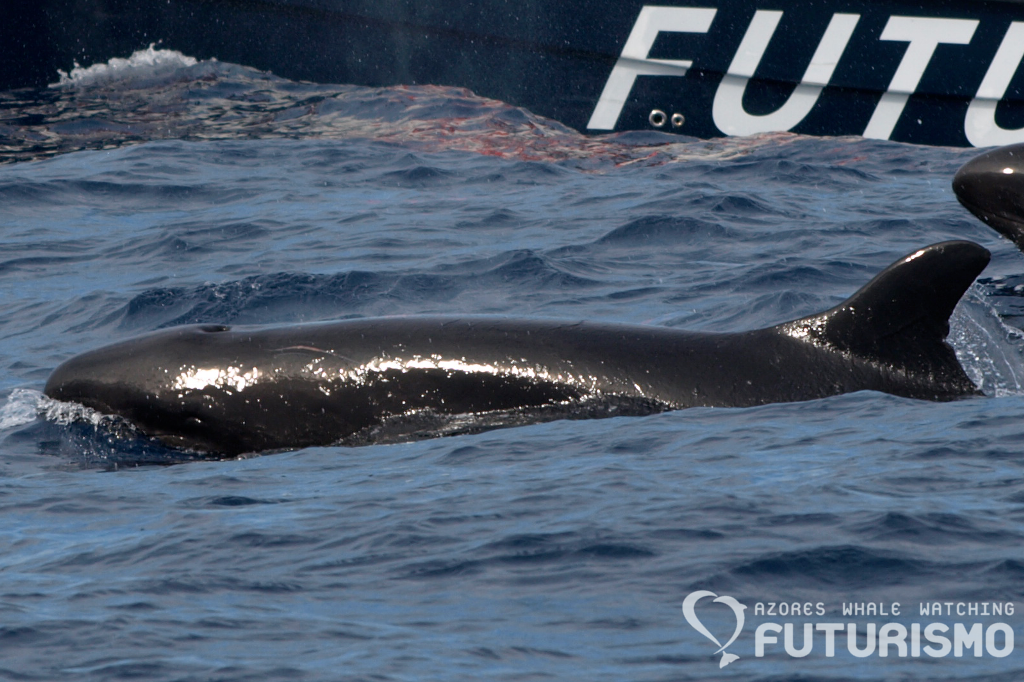
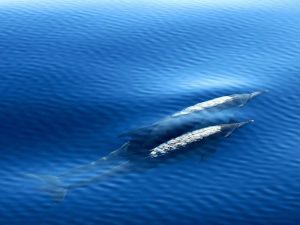
.jpg) The false killer
The false killer
whale got its name because it shares similar characteristics with the orca, although they are not directly related.
Like orcas they can attack dolphins and whales, including sperm whales; although they more commonly feed on large fish and cephalopods (squid and octopus). False killer whales have a bad
reputation, especially among fishermen because they often take large fish from longlines. They are not shy of boats and are frequently seen riding bow waves. Groups are usually made up of 10 – 60 individuals, although groups may join to form superpods of hundreds. False killer whales are found in tropical to warm temperate waters, but it is not known if they migrate as not much is known about their populations.
bottlenose dolphins.Length:
• Male: 6 m
• Female: 5 m
• Calf: 1.5 – 2.1 m
Weight:
• Male: 2,000 kg
• Calf: 80 kg
Global population: c.325,000 (population trend unknown)
Status: Data Deficient
Diet: Large fish such as tuna, cephalopods (squid and octopus), marine mammals
Teeth: 32 – 44
Longevity: 20 years
Breeding age: Unknown
Gestation: 11 months
Nursing: 18 months
In other languages:
Italian: Pseudorca
Dutch: Zwarte zwaardwalvis
Swedish: Halvspäckhuggare, falsk späckhuggare
Norwegian: Falsk spekkhogger
.jpg)
.jpg)
 |

 |

 Equipa de Biólogos da Futurismo


 Sandrina Rodrigues
