

 azwhales
After a
few days of bad weather, today the rain and the wind gave us a small break and
allowed us to go out again to the ocean. We left Ponta Delgada early in the
morning with the sun shining upon us and with three boats containing people eager to
see some species of cetaceans. Our lookout (vigia) had spotted several groups of
dolphins so he guided us towards the first group of them, a group of about 30
bottlenose dolphins (Tursiops truncatus) which were spread out in the
area, and as usual, really social and interested in us. After enjoying the
playful dolphins, we drove to another group spotted by our “vigia”, a
group of common dolphins (Delphinus delphis), which were more quiet
and social than the other dolphins, although we could observe them very close to
our boats, while bowriding and surfing the waves. Almost at the end of the
trip we spotted a Northern gannet (Morus bassanus), which despite is
kind of a common species of bird during this time of the year, it usually avoids boats presence.
few days of bad weather, today the rain and the wind gave us a small break and
allowed us to go out again to the ocean. We left Ponta Delgada early in the
morning with the sun shining upon us and with three boats containing people eager to
see some species of cetaceans. Our lookout (vigia) had spotted several groups of
dolphins so he guided us towards the first group of them, a group of about 30
bottlenose dolphins (Tursiops truncatus) which were spread out in the
area, and as usual, really social and interested in us. After enjoying the
playful dolphins, we drove to another group spotted by our “vigia”, a
group of common dolphins (Delphinus delphis), which were more quiet
and social than the other dolphins, although we could observe them very close to
our boats, while bowriding and surfing the waves. Almost at the end of the
trip we spotted a Northern gannet (Morus bassanus), which despite is
kind of a common species of bird during this time of the year, it usually avoids boats presence.
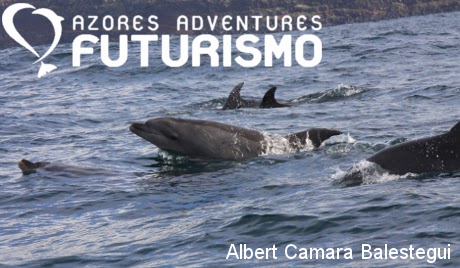
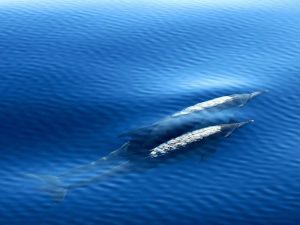
Bottlenose dolphins surfacing
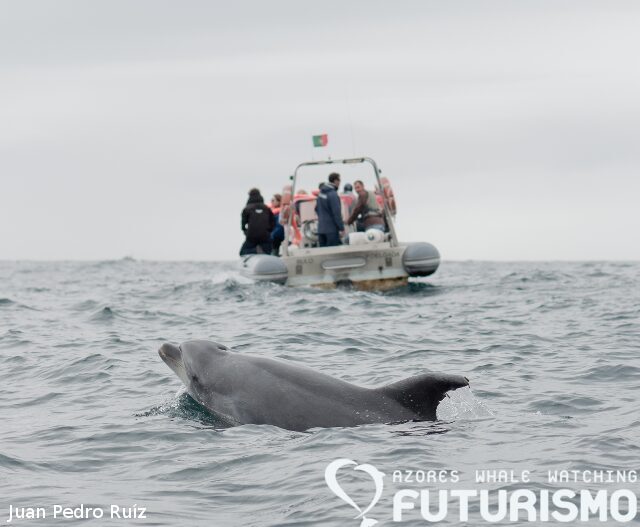
Bottlenose dolphin behind our boat Bulo

Common dolphins beside our boat João vigia

Northern gannet (Morus bassanus)
In the afternoon, we had again three boats, but the clouds showed up reducing the visibility that is essential to our lookouts. Nevertheless, we could make it and we could re-encounter the same groups of bottlenose dolphins and two groups of common dolphins. The common dolphins were again really interested in us, and our tourists could enjoy them despite the weather conditions. Besides these encounters, one of our boats found a silver scabbardfish (Lepidopus caudatus), as happened a few days ago.
Today’s best news is that the Cory’s shearwaters (Calonectris diomedea), which Azorean population represents about 60-70% of the world population, keep arriving from their annual migration routes, and now they are already one of the most common sea birds around these islands, since during the lasts days their numbers have highly increased.
More good news is that the water becoming very rich in food such as algae ( as we could see by the water’s green colouration) which feeds the rest of the food chain. It is undoubtedly a good signal for the presence of baleen whales… will we see them on the next trip?
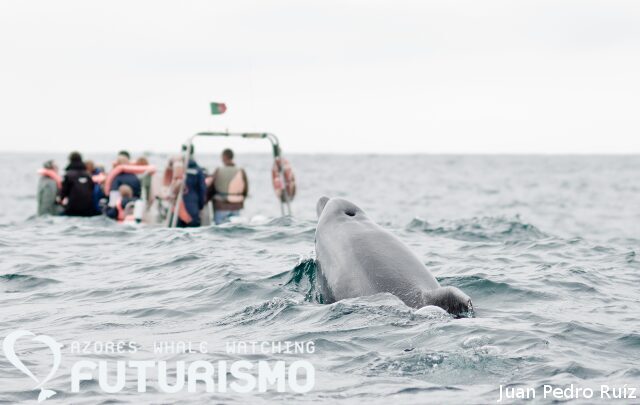
A bottlenose dolphin looking at one of our boats
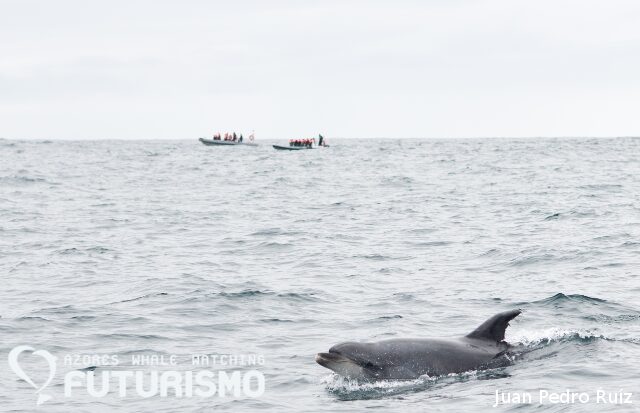
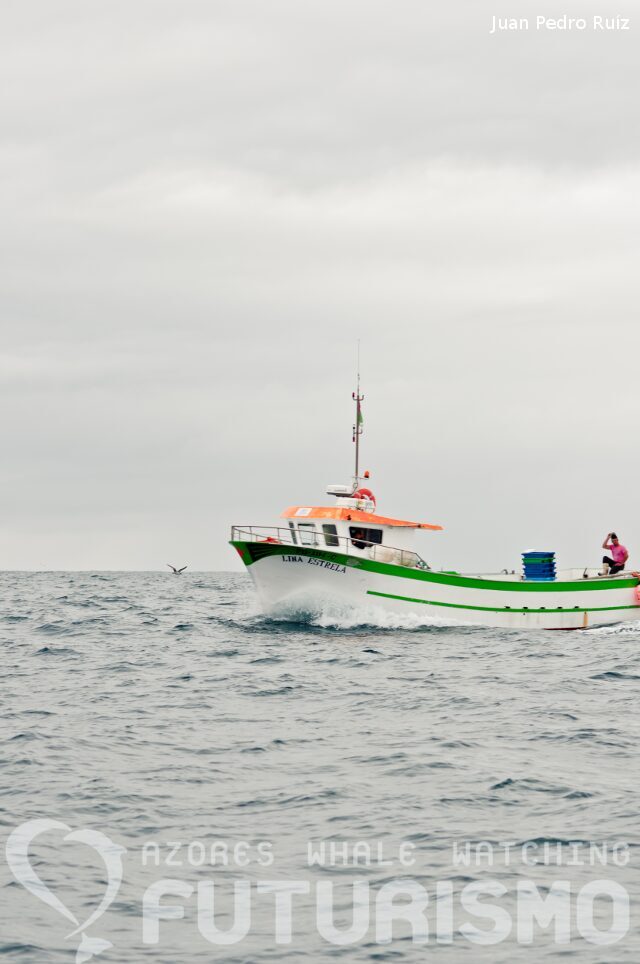
A fishing boat
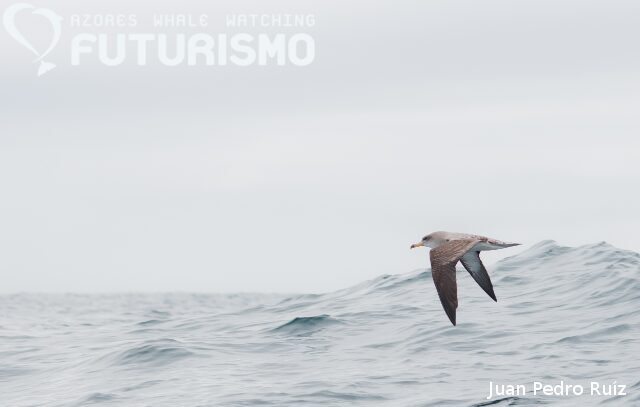
Cory´s shearwater (Calonectris diomedea)
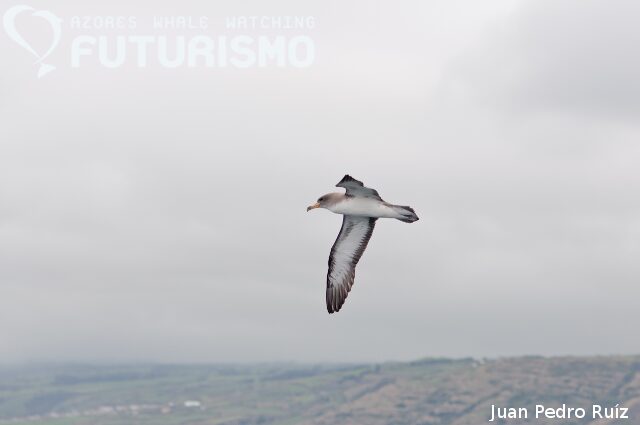
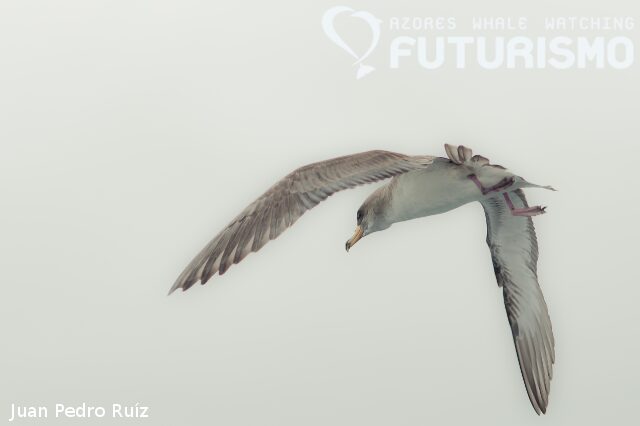
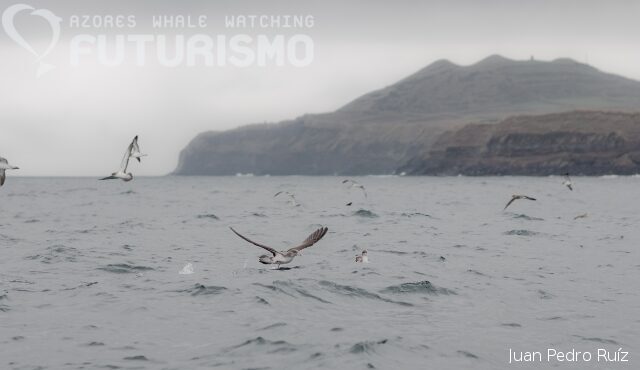
A big group of Cory´s sheawater flying close to the shore
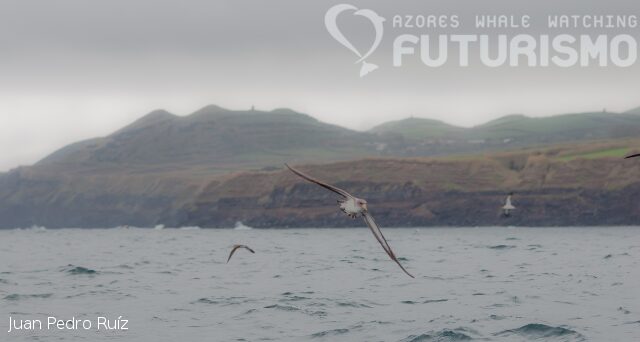
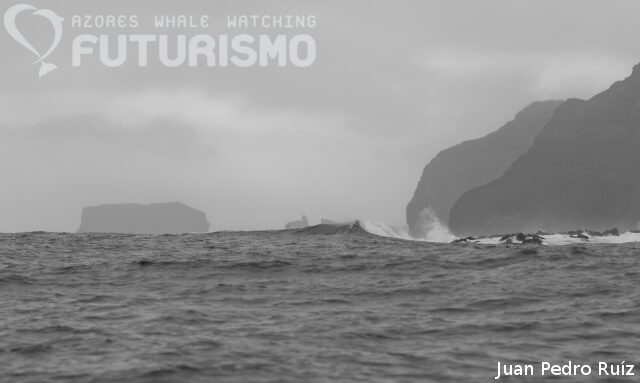
The beautiful landscape of Mosteiros
Common dolphin under the green water footage


 azwhales
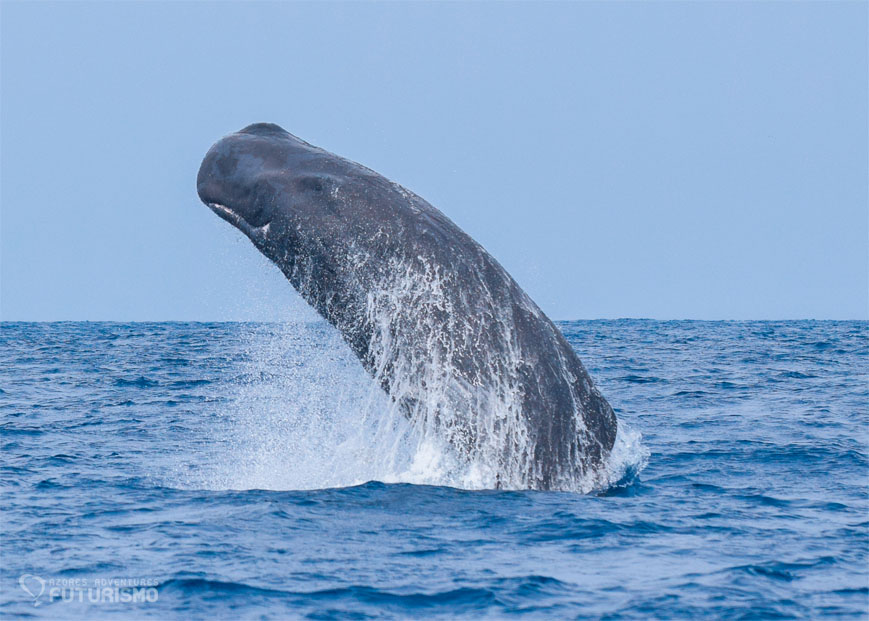

 Futurismo Biologists Team
 Sandrina Rodrigues
