

 Equipa de Biólogos da Futurismo
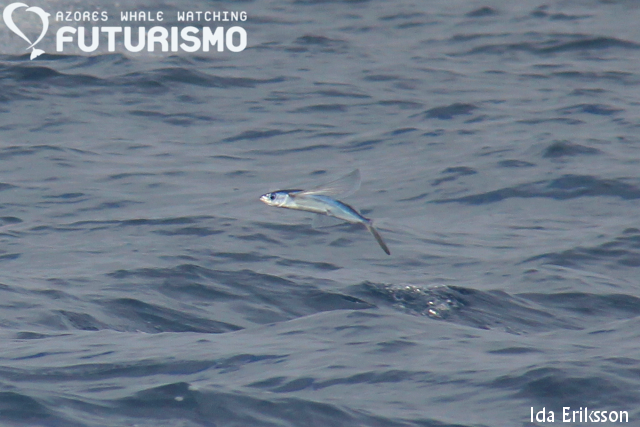
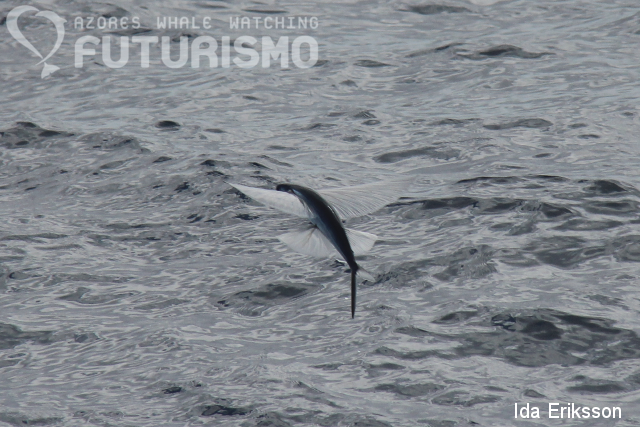
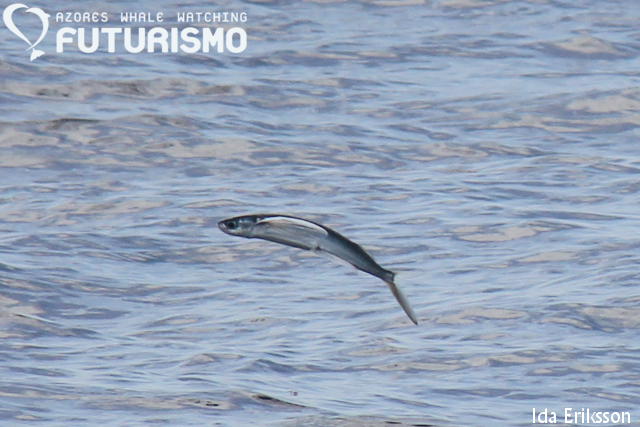
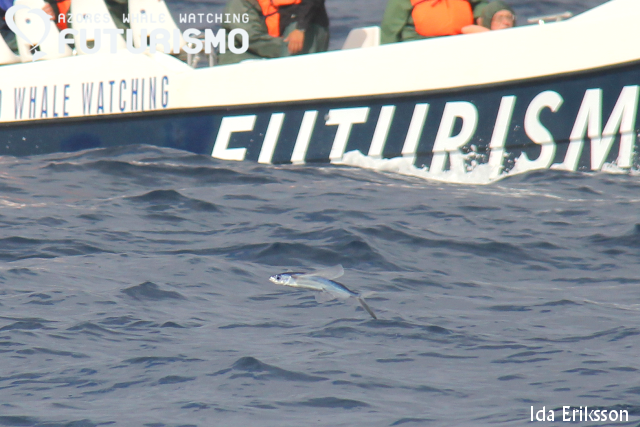
Cypselurus heterurus | Atlantic flying fish
There are about 64 different species of flying fish in the world. They are characterised by their ability to escape from predators by flying over the water. Flying fish have a streamlined body that grows slowly to reach an average length of 25 cm. The elongated body ranges in colour from silvery to blueish with pink tinges. The pelvic fins are very short, whereas the pectoral fins are very developed (for flight). The tail is forked, with the inferior lobe being bigger than the posterior lobe. The flying fish has a great camouflage that helps them evade predators. Individuals form big shoals and during times of reproduction the females release floating eggs in large amounts. Flying fish are commonly found in tropical and warm subtropical oceans, in deep holes, in gravel and coral reefs. In the Azores they are most often encountered in the summer, close to shore and on windy days. When the fish jumps out of the water to “fly” it can reach 6 meters and glide along a distance of 400 m.
Length: Up to 45 cm
Flight records:
• Height: 6 m
• Distance: 400 m
• Duration: 45 seconds
• Speed: 70 km/hr
• Tail speed: 70 times per second
Diet: Plankton and organic detritus from the surface
Longevity: 2 years


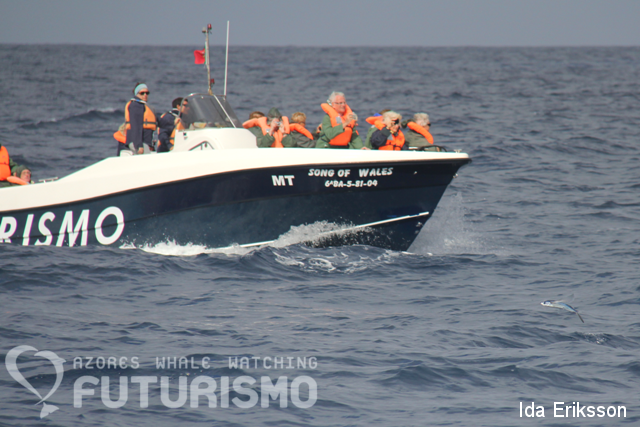
Flying fish in front of our boat “Song of Whales”




 Equipa de Biólogos da Futurismo

 Sandrina Rodrigues
