


 Equipa de Biólogos da Futurismo
Bulweria bulwerii | Bulwer’s petrel
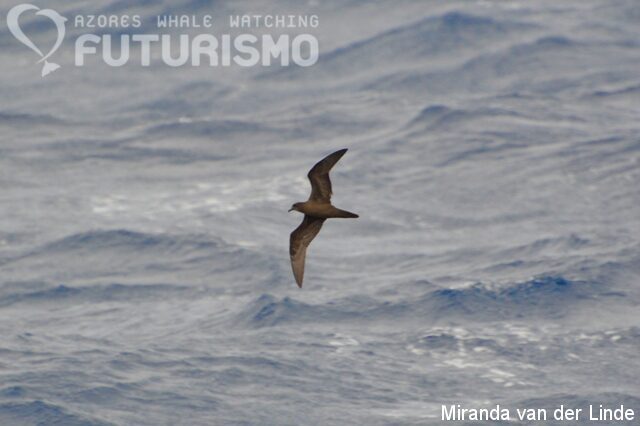 The bulwer’s petrel nests in the
Azores, Madeira, Canary Islands and Cape Verde. It is listed as Endangered
in the Azores, with
only about 50 couples nesting only in Santa Maria, on the islet of Vila
(although several birds have been caught in Graciosa Island). In the past this species was subjected to
intense human pressure through hunting, destruction of their nesting habitats
and predation by exotic mammals (especially cats, and rats). It is a highly pelagic bird,
coming to land only during breeding season which is usually from May to October. When in flight Bulwer’s petrels are silent,
but when they are at their nesting sites they emit a very characteristic sound
known as a “woof“. On the breeding grounds their behaviour is nocturnal and
colonial. The young fledge mid-September to October. This species is classified as “uncommon breeding” in the Azores.
Length: 26 – 28 cm
Weight: 87 – 98 cm
Wingspan: 68 – 73 cm
Population:
• Europe: 7,500 – 10,500 reproductive pairs
• Azores: c.50 pairs
Longevity: 22.9 years
Diet: Small fishes and crustaceans (overnight)
Eggs: 1 (white)
Nesting period: Between April and September
Incubation: 45 days
Nesting sites: Rocky cavities, coastal caves or under low vegetation
Fledging: c.62 days
In other languages:
Portuguese: Alma negra
Spanish: Petrel de Bulwer
French: Pétrel de Bulwer
Italian: Uccello delle tempeste di Bulwer
German: Bulwersturmvogel
Dutch: Bulwers stormvogel
Swedish: Spetsstjärtad petrell
Norwegian: Spisshalepetrell
Danish: –
Finnish: Tyrskyliitäjä


 Equipa de Biólogos da Futurismo



 Sandrina Rodrigues
