

 azwhales
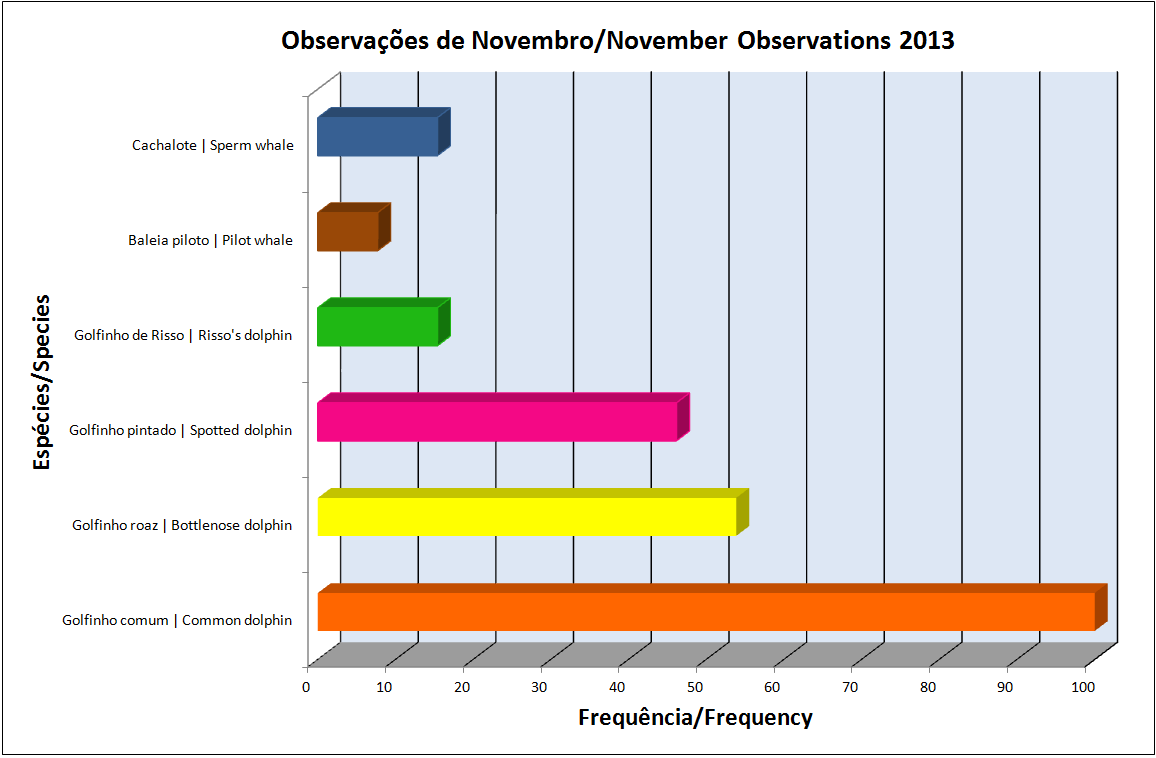
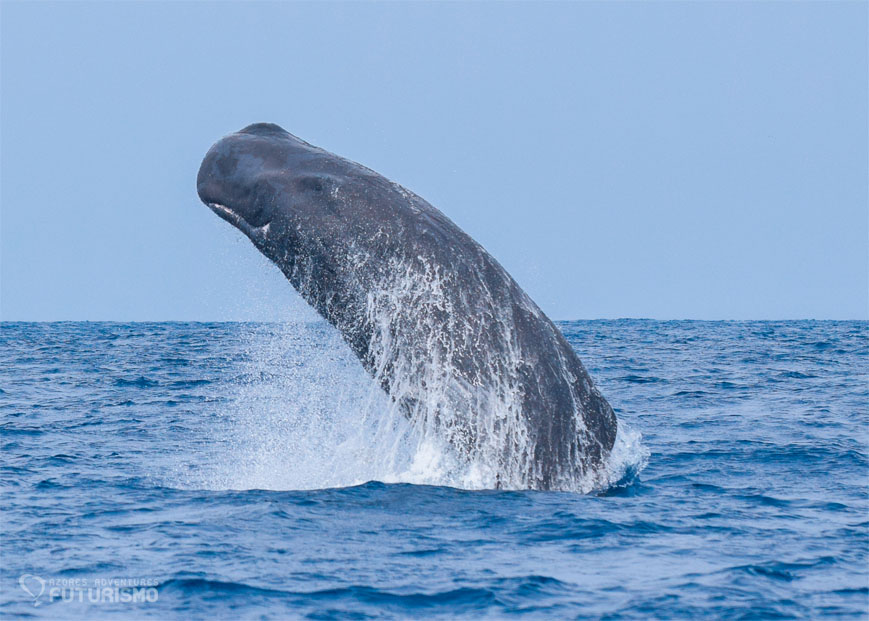
During the month of November this year we have had few tours. This is largely due to the unsettled weather and sea conditions which determine whether or not we are able to go to sea for our whale and dolphin watching and dolphin swimming tours. As is almost always the case in the Azores we have seen whales and/or dolphins during all of our tours this month. This time of the year is not our strongest time for whales (to see when is the best time click HERE), but we did have some encounters with our resident sperm whales that can still be seen all throughout the winter. We have also seen our regular dolphin species for this time of the year (common dolphins, bottlenose dolphins, Risso’s dolphins and Atlantic spotted dolphins) and we also had one day with pilot whales. As we head into the cooler winter months we can expect the Atlantic spotted dolphins to leave us, but we will continue to have encounters with our resident species (sperm whale, common dolphin, bottlenose dolphin and Risso’s dolphin) and we can also expect the occasional unexpected encounter with different species. When wildlife watching you never know what you are going to see!

- Common dolphin (Delphinus delphis) – 100% sighting frequency
- Bottlenose dolphin (Tursiops truncatus) – 54% sighting frequency
- Atlantic spotted dolphin (Stenella frontalis) – 46% sighting frequency
- Risso’s dolphin (Grampus griseus) – 15% sighting frequency
- Pilot whale (Globicephala spp.) – 8% sighting frequency
- Sperm whale (Physeter macrocephalus) – 15% sighting frequency


 azwhales

 Equipa de Biólogos da Futurismo
 Sandrina Rodrigues
